

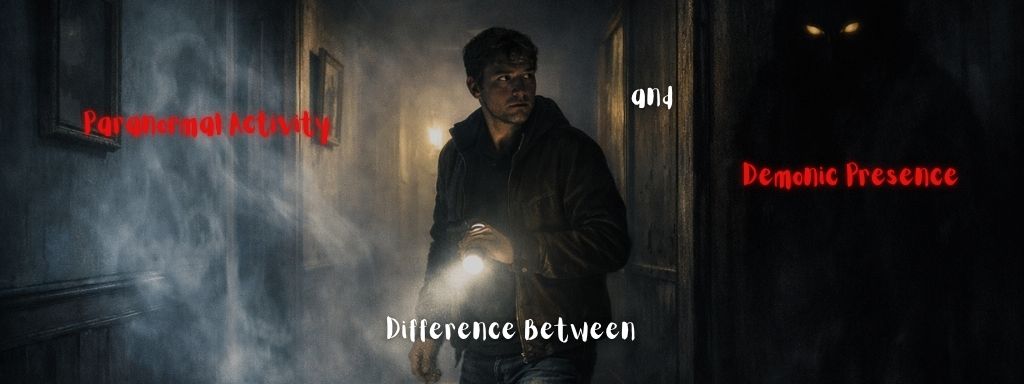
Most people have had a moment where something felt… off. Maybe it was a strange sound at night, a sudden chill, or the feeling that someone was nearby when no one was there. In many cases, these moments pass, and life goes on.
But sometimes, the experience doesn’t go away. It repeats. It starts to feel stronger, more personal, and harder to ignore. That’s when people begin asking an important question: Is this just normal paranormal activity, or could it be something more serious?
Understanding the difference between paranormal and demonic presence doesn’t mean assuming the worst. It simply helps you see things clearly and stay calm as you figure out what’s really happening.
What Normal Paranormal Activity Feels Like
Paranormal activity is usually light and short-lived. It might be something you notice once and then never again. Even if it happens more than once, it often doesn’t feel threatening.
For example, someone might hear footsteps when no one is around or notice a shadow that disappears quickly. These moments can feel strange, but they usually don’t strongly affect your emotions.
This is where the difference between ghost activity and demonic presence begins. General paranormal activity tends to stay in the background. It doesn’t try to interact with you directly, and it doesn’t create lasting fear.
When Things Start to Feel Different
There are times when an experience changes. It’s no longer just a strange moment. It begins to feel heavier and more noticeable.
When looking at early signs of demonic presence vs normal paranormal events, the biggest difference is how it affects you. Instead of curiosity, you may start to feel uneasy for no clear reason. The same things may happen again and again, and the atmosphere may feel uncomfortable.
People often say they can’t relax in certain spaces anymore. Even when nothing is happening, something just doesn’t feel right. This ongoing feeling is what makes the experience stand out from normal paranormal activity.
Passive Activity vs Direct Interaction
One of the simplest ways to understand the difference is by looking at interaction.
Most paranormal activity is passive. It happens, but it doesn’t respond to you. You might hear something or see something, but it doesn’t feel like it’s aware of you.
In more intense cases, people describe something very different. They feel like the presence notices them. It may seem to react to their emotions or actions. This is where the difference between harmless ghosts and demonic entities becomes clearer.
When something feels like it is focusing on you instead of just existing around you, it can make the experience feel more serious.
How the Environment Changes
Another important sign is how the environment feels over time.
With normal paranormal activity, the space usually feels the same overall. You might notice something unusual for a moment, but the feeling doesn’t last.
In situations that feel more intense, people often describe a change in the atmosphere. A room might feel heavy or uncomfortable without any clear reason. Some areas may feel colder or harder to stay in.
When we look at how the environment changes in demonic vs paranormal cases, the key difference is consistency. The feeling doesn’t come and go quickly. Instead, it stays or keeps returning, which makes it harder to ignore.
At this stage, many people also begin searching for deeper explanations, including questions like how demons enter a house, especially when the experience feels tied to a specific place rather than random moments.
Negative Energy or Something More?
Sometimes, a place can feel uncomfortable simply because of stress or emotions. This is often called negative energy. It can happen after arguments, stressful situations, or even long periods of tension.
When comparing signs of negative energy vs demonic presence, the main difference is how long it lasts and how it behaves.
Negative energy usually fades when the situation improves. It doesn’t feel focused on a person. But in more serious experiences, people describe something that feels constant and personal.
In some cases, especially those connected to communicating with demons’ experiences, people say the presence doesn’t just exist around them; it seems to interact with them in ways that feel intentional. This is what makes the experience more intense and harder to explain.
Learning from Real Experiences
Not everyone understands these experiences in the same way. Some believe they have encountered something beyond normal explanation, while others think there may be logical reasons behind what they felt.
In Experiences of the Paranormal: Real Conversations with Demons by Terry Fox, different people share their personal experiences. Many of these stories involve direct interaction, which is what separates them from general paranormal activity.
The book shows how these experiences often start small and grow over time. It also highlights how deeply they can affect a person, not just physically but emotionally and mentally as well.
Stay Calm and Think Clearly
If you ever experience something unusual, the most important thing is to stay calm. Not every strange moment has a serious meaning, and jumping to conclusions can create unnecessary fear.
Instead, it helps to pay attention over time. Notice if things repeat, how they make you feel, and whether they seem random or personal. Looking at the full picture makes it easier to understand what’s happening.
If you want to explore how certain experiences become more intense over time, you may also find our related paranormal stories and insights helpful in understanding the signs and patterns behind unusual encounters.
For more related articles, visit the blog section:
Final Thoughts
It’s normal to feel curious or even a little uneasy when something can’t be explained. But understanding the difference between paranormal and demonic presence can help you stay grounded.
Most paranormal experiences are harmless and short-lived. They don’t interact with you or affect your emotions in a strong way. More serious experiences, on the other hand, often feel personal, repeated, and emotionally intense.
The key is not to assume the worst, but to observe and stay aware. When you understand the patterns, it becomes much easier to tell whether something is simply unusual or something that feels very different.